
Cooking oil is a kitchen essential, but what happens to it after use? Simply pouring oil down the drain can clog pipes, damage sewage systems, and pollute waterways, leading to costly repairs and environmental harm. Fortunately, there are responsible ways to handle cooking oil disposal, recycling, and even reusing, ensuring that your kitchen waste doesn’t become a bigger problem for your home and the environment.
Why Proper Cooking Oil Disposal Matters
When oil is poured down the drain or thrown in the trash without care, it doesn’t just disappear. Instead, it can cause severe environmental damage, block vital infrastructure, and attract pests.
Environmental Impact
Once cooking oil enters the waterways, it disrupts the oxygen intake of aquatic life. Fish and other wildlife that come into contact with oil can suffer from suffocation, hypothermia, dehydration, and starvation. In many ways, cooking oil pollution has effects similar to those of a petroleum spill, which can linger in the environment for years.
Infrastructure and Health Concerns
Beyond environmental risks, used cooking oil can also damage plumbing and public sewer systems. Oil becomes solid as it cools, forming thick blockages in the pipes and leading to costly repairs. Large-scale buildups can even clog water treatment plants, causing widespread sanitation issues. Additionally, oil-soaked trash attracts rodents, insects, and other pests.
How to Properly Dispose of Cooking Oil
While it might be tempting to simply pour oil down the drain, properly disposing of used cooking oil is a responsibility that protects the environment, prevents costly plumbing issues, and maintains sanitation standards.
Instead, consider these effective and responsible oil disposal methods:
1. Recycling and Repurposing Cooking Oil
Used cooking oil can be recycled and transformed instead of being wasted. Many recycling facilities accept cooking oil, filter it, and repurpose it into animal feed, petroleum-based products, fertilizer, and even soap.
Pickup Services and Household Hazardous Waste (HHW) Collection: Some companies offer doorstep collections for used oil to ensure that it’s properly processed and reused. Check with your cooking oil supplier to see if they offer oil recycling or disposal programs for their customers. Some waste management facilities also accept used cooking oil as part of their HHW programs, in addition to other hazardous items such as old batteries, chemicals, and medical waste.
Community Recycling Programs: You can also check with your local government about how to dispose of oil properly. Some offices and environmental groups may provide drop-off locations where residents can bring their used cooking oil. These initiatives help convert oil into valuable resources while reducing waste.

2. Disposing of Cooking Oil
In the Philippines, proper disposal of used cooking oil is required by law. Under Republic Act 6969, waste oils such as used vegetable oil, tallow, and oil-water mixtures are classified as hazardous waste. That means waste generators like restaurants and other food businesses must manage oil disposal responsibly.
For larger volumes of oil, waste generators are required to partner with DENR-accredited waste transporters and waste treaters. Waste generators remain accountable until the oil is officially treated or disposed of and must only work with authorized haulers and certified treatment facilities.
Cooking Oil Disposal: What Not to Do
As we’ve seen above, improper disposal of cooking oil can lead to plumbing issues, environmental contamination, and safety hazards. Here are key practices to avoid these from happening:
Do not pour oil down sinks, plumbing, or drains. It can solidify and cause severe blockages in plumbing systems.
Never pour hot oil directly into a trash can. This can attract pests and even pose a fire risk.
Avoid composting cooking oil. Excessive oil can disrupt the composting process and attract rodents.
Use sealed containers. Always store used oil in a secure container to prevent leaks and spills before disposing of it.
Additional note on how to throw away cooking oil via composting:
Oils can slow down the composting process, which is why they are generally not recommended. However, small amounts of vegetable oil—such as sunflower, corn, or olive oil—can be composted if they were not used with meat, cheese, or fish. The key is proper mixing with brown matter, such as dry leaves or twigs, to ensure even distribution and prevent clumping.
Alternative: Reuse Cooking Oil
Reusing cooking oil is a great way to minimize waste and get the most out of your ingredients. However, oil must be properly cleaned and stored to maintain quality.
Here’s how to safely filter and reuse your cooking oil instead of disposing it:
Step 1: Strain the Oil
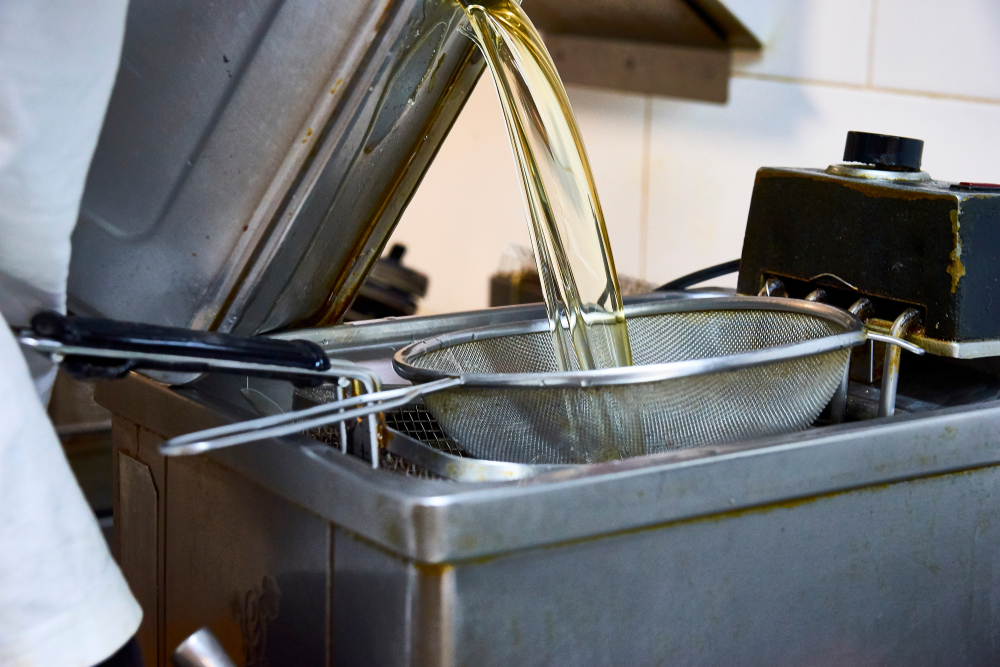
Place a strainer over a clean bowl or pot and line it with kitchen paper. This catches fine particles that could otherwise degrade the oil over time.
Step 2: Remove Large Debris
Use a skimmer or spoon to remove any food particles floating in the oil. Debris can speed up spoilage and affect the taste of future dishes.
Step 3: Filter Thoroughly
Slowly pour the oil through the lined strainer, ensuring only clean liquid passes through. If you’ve fried flour-dredged foods, avoid including the sediment at the bottom, as this can cloud the oil and cause it to spoil faster.
Step 4: Cool and Store Properly
Cover the filtered oil to prevent dust from settling while it cools. Once cooled, transfer it back into its original container using a funnel, seal it tightly, and store it in a cool, dry place for future use.
How to Determine If Oil Is Good to Reuse
Now you know how to throw away cooking oil, but how do you know if it’s good for another meal?
There’s no rule for how many times oil can be reused, but checking the following ensures that the oil remains safe and doesn’t affect the flavor of your food:
Type of Food Cooked
Certain foods leave stronger flavors and residues in oil and make it less suitable for reuse. If you’ve fried fish, heavily marinated meats, or anything with a strong aroma, it’s best to discard the oil. However, if the oil was used for frying lightly battered chicken or vegetables, it may still be suitable for another use.
Appearance and Smell
The easiest way to tell if oil is still usable is to check its color and scent. Fresh oil is typically light in color, while oil that has turned dark or murky is a sign it should be discarded. If it has a strong smell, it’s time to get rid of it.
Moreover, if you want to get the most out of your oil, the type of oil you use makes a big difference. Some oils are specially formulated to withstand higher temperatures and repeated use, helping you get better mileage out of each batch.
For example, Oleo-Fats offers long mileage oils like Crisp ‘n Dry Deep Frying Fat, which is processed to last longer for repeated frying. It’s a smart choice for busy kitchens that need consistent results without constantly swapping out oil.
Dispose of Your Cooking Oil the Right Way
Discarding cooking oil properly prevents clogged pipes, sewer damage, and environmental pollution. There are several ways to do this: reusing oil safely, composting in small amounts, and recycling through local programs. A food ingredients supplier that promotes sustainable and eco-friendly practices also helps minimize waste from the start.
As a trusted name in food solutions, Oleo-Fats provides high-quality specialty oils for long mileage use and offers oil blending customization to match your kitchen’s needs. If you’re running a foodservice operation, we can also supply grease-trap systems to help you manage wastewater more efficiently, making it easier for your business to run cleaner and smarter.
Proper cooking oil disposal protects your home, reduces waste, and contributes to a more sustainable community. Partnering with experts like Oleo-Fats makes it even easier. Try it the next time you cook—it’s a simple yet impactful way to care for your household, your business, and the planet!