Customers are paying more attention to what is in their food, and cooking oil is no exception. Discover healthy cooking oil options that are revolutionising foodservice.
Key Takeaways
- Not all oils are equal: saturated fat content and smoke point both matter for health and kitchen performance.
- Rapeseed, high-oleic sunflower, refined olive, and blended vegetable oils offer the best balance of health credentials and high-heat performance for professional kitchens.
- Switching to healthier oils does not mean compromising on yield, flavour, or cost efficiency when you source the right product for your operation.
There is a quiet but significant shift happening in UK foodservice right now. The operators who see it most clearly are those running kitchens in schools, hospitals, care homes, workplace canteens and hotel restaurants. Diners, patients, students, and guests are paying closer attention to ingredients, not just overall calorie counts, but the specific quality of what goes into their food.
This is not a passing trend. In 2023, the UK Food Standards Agency reported that health and nutrition remain among the top concerns for British consumers when choosing what to eat.
Cooking oil is at the centre of this. It is present in almost every dish, increasing the fat content of each portion. And unlike many ingredients, it is largely invisible on the plate, which makes it easy to overlook as a lever for improving menu health. That is a missed opportunity.
Understanding which cooking oil is good for health is a practical and commercially relevant question.
What Actually Makes One Oil Healthier Than Another?
Not every health claim on an oil label carries equal weight. In a professional kitchen context, there are four characteristics worth focusing on.
1. Unsaturated Fat
This is the most important nutritional factor. Unsaturated fats, both monounsaturated and polyunsaturated, support cardiovascular health by helping to lower LDL (bad) cholesterol levels. The American Heart Association and the British Heart Foundation both recommend replacing saturated fats with unsaturated fats as a meaningful dietary intervention. A healthy cooking oil will have a high proportion of unsaturated fat relative to saturated fat.
Oils such as rapeseed, olive, avocado, and high-oleic sunflower are high in monounsaturated fat. Rapeseed and flaxseed oils also provide omega-3 fatty acids, which are important for customers with low dietary intake.
For food manufacturers, the fat profile of the oil used in a product directly affects the Nutritional Information panel on pack, making oil choice a labelling decision as well as a culinary one.
2. Trans Fat
Trans fats are the fat type with the clearest and most unambiguous link to cardiovascular disease. Partially hydrogenated oils, which were historically used in commercial frying and baking to extend shelf life and improve texture, are the primary source of artificial trans fats in the food supply.
Trans fat awareness remains high among buyers, procurement managers, and health-conscious consumers. Any oil or fat product used in a commercial kitchen or food manufacturing context should be fully free of artificial trans fats, and the ability to confirm this to procurement managers and customers is a practical asset.
For foodservice operators supplying schools, hospitals, or care homes: being able to confirm that your cooking oils are trans-fat-free is not a marketing point. It is a baseline requirement.
3. Cholesterol-Free Formulation
All plant-based oils are naturally free of cholesterol. Cholesterol is only found in animal-derived fats such as butter, lard, and dripping. This matters in foodservice because customers with cardiovascular conditions, high cholesterol, or specific dietary plans are actively seeking reassurance that the food they eat is not contributing to their cholesterol intake.
Switching from animal fats to plant-based oils in roasting, frying, and sauce preparation removes dietary cholesterol from those dishes entirely. For menus served in health-sensitive environments such as hospitals, care facilities, and cardiac rehabilitation catering, this is a material change with real health implications.
4. Clean-Label and Non-GMO Credentials
Beyond the core fat profile, a growing number of buyers across the UK foodservice and food manufacturing sectors are prioritising healthy oil for cooking that carries clean-label and non-GMO credentials. Cold-pressed oils, certified non-GMO products, and minimally processed options are seeing growing demand, particularly from operators in the premium hospitality segment and from institutional buyers with explicit sustainability or food quality policies.
Clean-label does not simply mean natural-sounding; it means the product can be communicated clearly and credibly to end consumers without hiding behind complex ingredient declarations.
5. Smoke Point
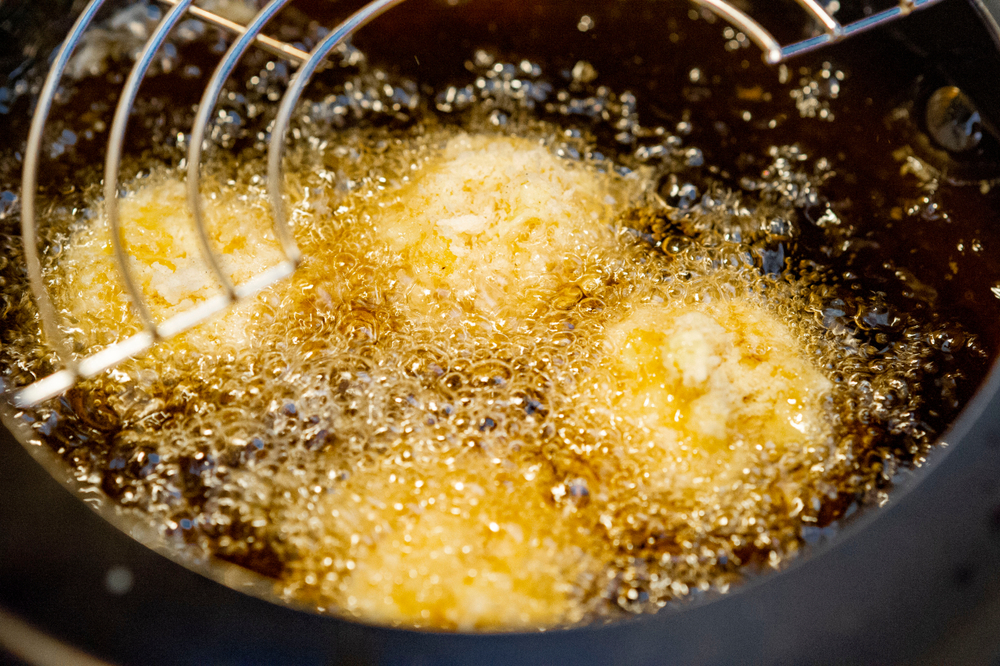
Every oil has a smoke point, the temperature at which it starts to break down and release free radicals and harmful compounds. In a commercial kitchen, where fryers run at 175 to 190 degrees Celsius, and wok stations can hit 220 degrees, using oil with a too-low smoke point is both a health risk and a quality issue.
Degraded oil produces smoke, off-odors, and imparts an unpleasant flavor to food.
Which Oil is Good for Health and Cooking?
Those willing to make the switch to a healthier cooking oil can opt for these alternatives:
1. Rapeseed Oil (and Canola Oil)
Rapeseed oil has one of the lowest saturated fat levels of any commonly used oil (around 6 to 7%), is rich in monounsaturated fat, and contains a naturally occurring omega-3 fatty acid (ALA) that no other mainstream cooking oil can match in the same proportion.
Its high smoke point (around 220 to 230 degrees Celsius) makes it practical for deep-frying, roasting, and stir-frying. The flavour is neutral, so it does not interfere with dishes. Cold-pressed British rapeseed oil carries additional clean-label and provenance appeal for premium operators.
Canola oil is the North American name for the same crop, and many commercially available rapeseed-based products use the canola designation. For food manufacturers, it is a cost-effective, nutritionally strong base oil for emulsified products, dressings, sauces, and ready-meal components.
2. High-Oleic Sunflower Oil
Standard sunflower oil is common in UK kitchens, but the high-oleic variety offers better health and performance characteristics. The elevated monounsaturated fat content makes it significantly more stable at high temperatures than regular sunflower oil, with a smoke point of around 230 degrees Celsius and better oxidative stability over extended cooking periods.
It has very low saturated fat (around 1.5 grams per tablespoon), a clean and neutral flavour and is widely available in bulk formats suitable for institutional caterers and food manufacturers. It is a practical, healthy option for operations running high-volume deep-fryers.

3. Refined Olive Oil
Olive oil is well understood by consumers as a heart-healthy option and for good reason. It is high in monounsaturated fat (specifically oleic acid), low in saturated fat, and has been extensively studied in relation to cardiovascular health outcomes. Extra-virgin olive oil has the strongest clean-label credentials, but its lower smoke point (around 160 to 190 degrees Celsius) limits its practical use in commercial cooking.
Refined olive oil, sometimes sold as light or pure olive oil, has a higher smoke point of up to 240 degrees Celsius. It retains the beneficial fat profile of olive oil while being suitable for pan-frying, oven roasting, and higher-temperature applications.
A combination of refined olive oil for cooking and extra-virgin olive oil for finishing is a great option for hotel restaurants and casual-dining kitchens.
4. Avocado Oil
Avocado oil has the highest smoke point among mainstream cooking oils, reaching up to 270 degrees Celsius. It is rich in monounsaturated fat and has a premium clean-label positioning. In the UK market, it remains a higher-cost option, limiting its use in high-volume institutional settings.
Where it makes most sense is in premium restaurant and hotel kitchens, high-heat grilling and searing applications, and as a featured ingredient in health-positioned dressings and dips. Some food manufacturers are also using it as a premium designation on packaging, particularly in the health food and premium ready-meal segments.
5. Quality Blended Vegetable Oils
Purpose-formulated blended oils are the most practical solution for many large-scale foodservice operations. A well-designed blend can deliver low saturated fat, a high smoke point, a neutral flavour and cost-effective bulk, all in a single product.
For contract caterers, food manufacturers, and institutional kitchens that need one reliable all-purpose oil rather than multiple products for different applications, a quality commercial blend is often the answer. Working with a supplier who can provide full specifications and traceability documentation matters here.
Sourcing Better Oils for Your Kitchen or Production Line
The cooking oils you use are not a minor detail in foodservice or food manufacturing; they affect the nutritional profile of every dish, every product, and every portion you produce. With health consciousness at a long-term high among UK consumers and with procurement standards in institutional settings tightening, the solution is clear.
But switching to a healthier oil profile is one thing. Finding the right products from the right fats-and-oils supplier is another.
Oleo-Fats, Incorporated (OFI) has been supplying oils, fats, and related ingredients to food manufacturers and the hospitality sector across the United Kingdom for years. The product range is built around the realities of professional kitchens and production environments: bulk packaging, consistent quality from batch to batch, and formulations designed to perform under commercial conditions rather than just look good on a spec sheet.
We have the equipment and expertise to answer your most pressing question: “Which cooking oil is good for health?”
Contact us to discuss your operation’s oil requirements, request samples, or to find out more about the full product range.
Frequently Asked Questions
1. What is the healthiest cooking oil for a commercial kitchen in the UK?
For most UK commercial kitchens, refined rapeseed oil offers the best overall profile: low saturated fat, a high smoke point, neutral flavour, and good cost efficiency at volume. High-oleic sunflower oil is another strong option for high-heat applications, and refined olive oil works well in operations where Mediterranean or premium positioning matters.
2. Is coconut oil a healthy choice for foodservice cooking?
Not as a general-purpose cooking oil. Coconut oil is high in saturated fat, which can raise LDL cholesterol. It has specific uses in baking, confectionery, and flavour-forward dishes where its profile is an asset, but it should not be a primary frying or roasting oil in a health-conscious kitchen.
3. Why does smoke point matter in a professional kitchen?
When oil is heated beyond its smoke point, it begins to break down and release harmful compounds, including free radicals, which are linked to oxidative stress and chronic disease. On the other hand, using an oil with a smoke point that is too low for high-heat cooking is both a health risk and a food-quality issue, causing off-flavours and poor cooking results.

4. Can I use extra virgin olive oil for frying?
Extra virgin olive oil has a relatively low smoke point (around 160 to 190 degrees Celsius) and is not well suited to deep-frying or high-heat stir-frying. Refined olive oil (also called light or pure olive oil) has a significantly higher smoke point and is a more practical choice
5. Is rapeseed oil the same as canola oil?
Essentially, yes. Canola oil is a variety of rapeseed oil originally developed in Canada. Both are produced from the rapeseed plant and share a very similar nutritional profile: low saturated fat, high in monounsaturated fats, and a good smoke point for commercial cooking.