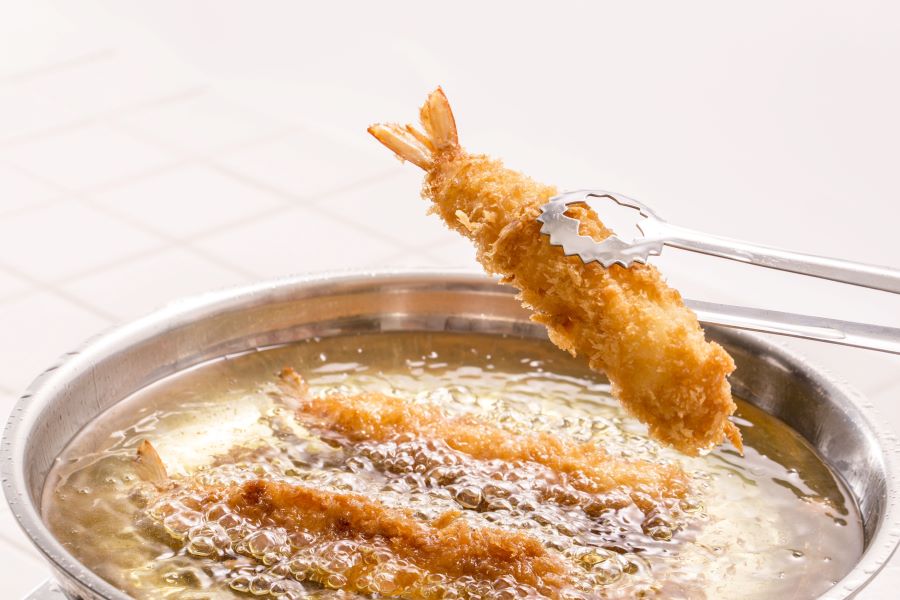
Walk into most busy commercial kitchens, and the fryer is one of the hardest-working pieces of equipment in the building. Yet, oil selection is often treated as a secondary purchasing decision, driven mainly by price.
The result is predictable: oil that degrades too quickly, food that tastes inconsistent, fryers that need more maintenance, and waste that adds up to real money. Asking which oil is best for deep frying in a professional context is not a trivial question. It is a question with a direct correlation to food quality, operational cost, and kitchen efficiency.
This guide covers what actually matters when selecting the best oil for deep frying and how getting this right affects more than just what comes out of the fryer.
What to Look for in an Oil for High-Volume Frying
Not all cooking oils are built for sustained, high-temperature commercial use. Here are factors to consider when choosing the best oil for deep frying in commercial kitchens:
1. Smoke Point
The smoke point is the temperature at which an oil begins to break down and smoke. In a commercial deep fryer, oil typically operates between 170 and 190 degrees Celsius. An oil for deep frying needs a smoke point comfortably above that range, ideally 220 degrees Celsius or higher, to accommodate temperature fluctuations and avoid the harmful compounds and off-flavours that degraded oil produces.
Using an oil with a smoke point that is too close to your operating temperature is a fast route to poor food quality and shortened oil life. In a busy service period, when cold food hits the fryer and temperatures spike and recover repeatedly, that margin matters a great deal.
2. Oxidation Stability
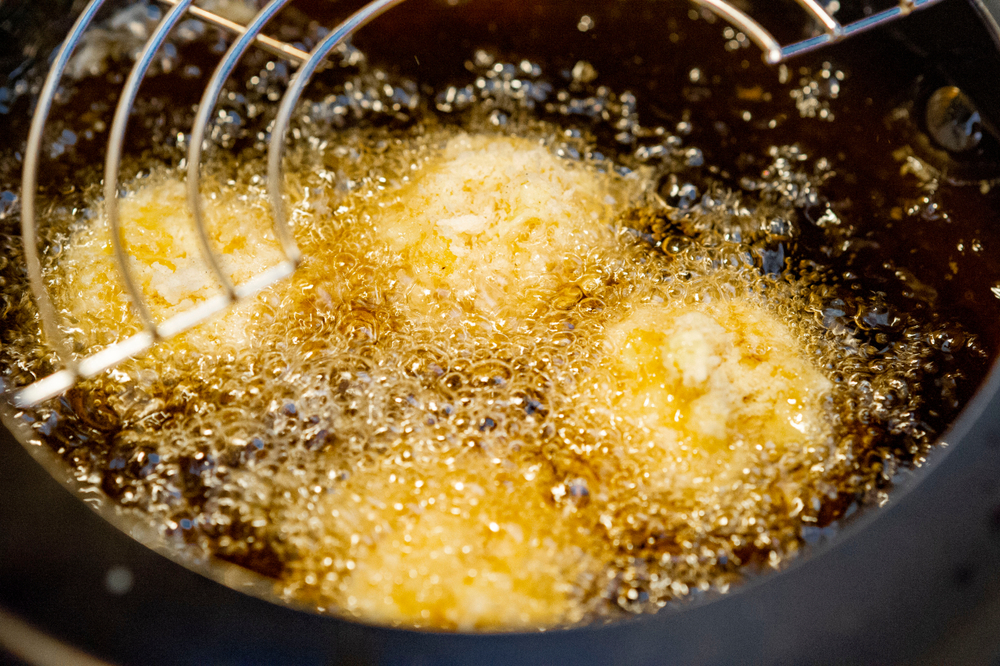
Oxidation is what happens to oil when it is exposed to heat, air, and moisture over time. As oil oxidises, it becomes darker, develops off-flavours, and produces compounds that are both harmful and unpleasant in food. An oil with high oxidation stability degrades more slowly, which means it lasts longer in the fryer, maintains food quality across a longer service period, and reduces how often you need to change it.
Oxidation stability is largely determined by fat composition. Oils high in monounsaturated fats are significantly more stable under heat than those high in polyunsaturated fats. This is why high-oleic sunflower oil and refined rapeseed oil outperform regular sunflower or vegetable oil blends in sustained frying applications.
3. Reusability and Oil Life
Directly linked to oxidation stability, an oil’s reusability is a significant factor for the best oil for deep frying. Oil that breaks down quickly needs to be changed more often, which increases raw material, waste disposal, and labour costs. It also creates inconsistency in food quality across a service period, as customers eating early in the day get food fried in fresh oil, while those eating later get food fried in degraded oil.
Kitchens that switch to a higher-stability oil often find that the higher per-litre cost is more than offset by significantly extended oil life. Fewer changes per week add up quickly across a high-volume operation.
4.Neutral Flavour Profile
The oil should be invisible to the customer in most commercial frying applications. A neutral flavour profile ensures the oil does not interfere with the food’s seasoning or character. Oils with distinctive flavour profiles, such as coconut oil or certain unrefined oils, can work in specific menu contexts but create problems when used across a broad range of fried dishes.
Neutral also means consistent. An oil that picks up strong flavours from one batch of food and carries them into the next is a problem in a kitchen frying a mixed menu. High-oleic sunflower, rapeseed, and purpose-formulated blended frying oils all deliver a clean, flavour-neutral base.
5. Cost Efficiency at Volume
The true cost of oil for a commercial kitchen is not the price per litre. It is the cost per usable frying cycle, accounting for how long the oil lasts before replacement, how much food can be fried in each batch, and how consistently it performs over its life.
A cheaper oil that needs to be changed twice as often is not cheaper. A premium oil with a 30% longer usable life at a 15% higher price is a better commercial proposition. Understanding this distinction is what separates reactive purchasing from strategic ingredient management.
6. Health Profile
For foodservice operators serving health-sensitive groups, particularly schools, hospitals, and care homes, the fat profile of the oil for deep frying has nutritional implications. Trans fat-free oils with lower saturated fat content are increasingly required for procurement in institutional settings. Operators seeking a healthy cooking oil that performs well in a commercial fryer will find the strongest options in the high-oleic sunflower and rapeseed categories.
The Best Oils for High-Volume Commercial Deep Frying
1. High-Oleic Sunflower Oil
The high monounsaturated fat content of high-oleic sunflower oil gives it exceptional oxidation stability, a smoke point of around 230 degrees Celsius, and a neutral flavour that works across any menu. It produces consistently high-quality results, significantly extends fryer oil life compared to standard sunflower oil, and is available in bulk formats at commercially viable prices.
For hotels, restaurants, and institutional caterers running high-throughput fryers, it is the benchmark product.

2. Rapeseed Oil (Canola)
Rapeseed oil is the workhorse of many UK professional kitchens, and for good reason. It has a smoke point of around 220 degrees Celsius, a strong oxidation stability profile, very low saturated fat content, and a naturally occurring omega-3 fatty acid that gives it one of the better health profiles of any oil for high-volume frying. Cold-pressed British rapeseed oil is also a strong clean-label option for operators where provenance matters on the menu or to procurement buyers.
3. Purpose-Formulated Blended Frying Oils
A purpose-formulated blended frying oil is often the most practical answer to which oil is best for deep frying at volume. These oils are engineered specifically for commercial fryer conditions: high smoke point, maximum oxidation stability, neutral flavour, and long oil life. They remove the need to manage multiple oil types across different fryer applications and are typically available in bulk formats designed for institutional purchasing.
Why the Type of Oil Matters in High-Volume Deep Frying
Beyond food quality, the oil you choose directly affects your kitchen’s operational efficiency in ways that are easy to underestimate.
Reduced Oil Costs and Changeover Labour
Better oil stability means fewer full oil changes, which reduces raw material spend, waste disposal costs, and labour time spent managing oil top-ups and changeovers during service.
Extended Fryer Equipment Lifespan
Cleaner, more stable oil keeps fryer elements and heating components in better condition over time. Carbonised oil residue is a significant contributor to fryer wear and maintenance requirements.
Consistent Food Quality Across Every Service
Consistent oil quality throughout a service period means the twentieth portion of chips tastes as good as the first, which is more important to repeat customers and institutional buyers than most operators realise.
Nutritional Compliance for Health-Sensitive Settings
Using a healthy cooking oil with a documented trans-fat-free and low-saturated-fat profile supports compliance with procurement standards and nutritional reporting requirements.
Formulating Professional Frying Oils for Commercial Kitchen Demands
The best oil for deep frying in a commercial kitchen is not simply the cheapest oil available in bulk. It is the oil that delivers the right smoke point for your operating temperatures, the oxidation stability to last through service without degrading, a neutral flavour that lets your food speak for itself, and a cost-per-use that makes sense at the volumes you are running.
Oleo-Fats, Incorporated is a trusted fats and oil products supplier with a range designed for the realities of professional food service and food manufacturing. For operators looking for the best oil for deep frying at commercial volumes, OFI supplies high-oleic sunflower oil, rapeseed and canola oil, refined frying blends, and a range of specialty oils in bulk formats suited to institutional, hospitality, and food manufacturing use.
The right product for each operation depends on the fryer configuration, menu profile, throughput, and buyer requirements. The OFI team is equipped to advise on the best match and to supply it consistently at the scale your operation needs.
Contact us for a consultation.